
29 May 2026
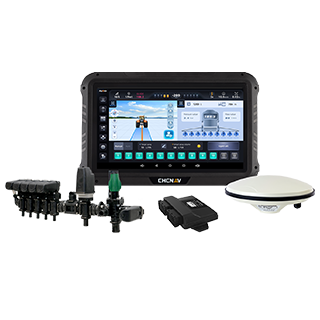
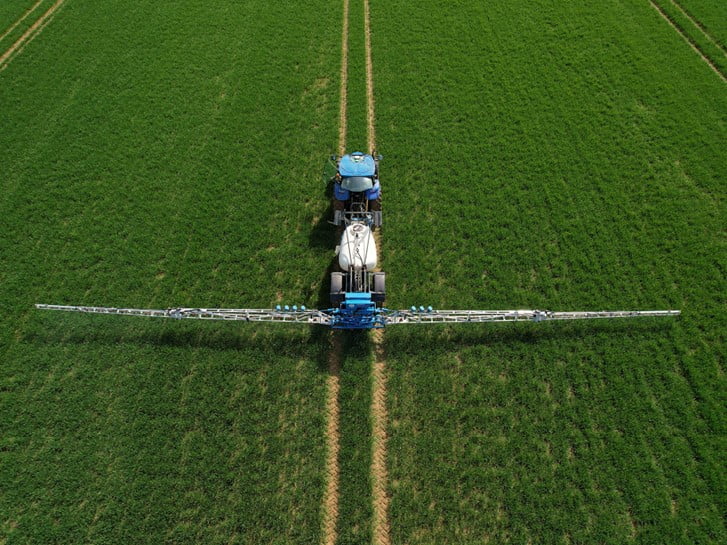
Application accuracy is where a sprayer earns or loses its margin. Every overlap is chemical you paid for and applied twice; every miss is a window the disease or pest gets to widen. Headlands, turns, irregular field shapes, and inconsistent vehicle speed all push real-world application off the label rate. The 2026 CHCNAV SprayX100 is built to close that gap. The system brings GNSS-driven section control, speed-adaptive flow, automatic start-and-stop, and nozzle-level overlap detection to the agricultural sprayer, and it shares the cab display with the auto-steering system so the operator works from one screen instead of two. This article walks through the six features the 2026 SprayX100 upgrade introduces, then steps back to look at where spraying automation fits in the broader precision-agriculture picture.
Before turning to what the SprayX100 does differently, it is worth restating the operational pain points the system is built to solve. Five recur on almost every sprayer that has not been retrofitted:
None of these problems are exotic. They show up on every farm that has not moved to integrated spraying automation. The SprayX100 addresses each of them as a discrete software-driven function on the same display the operator already uses for auto-steering.
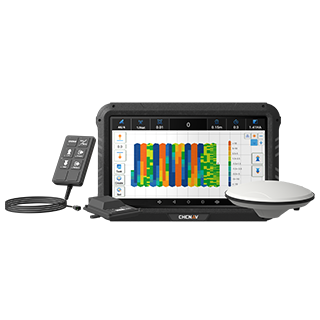
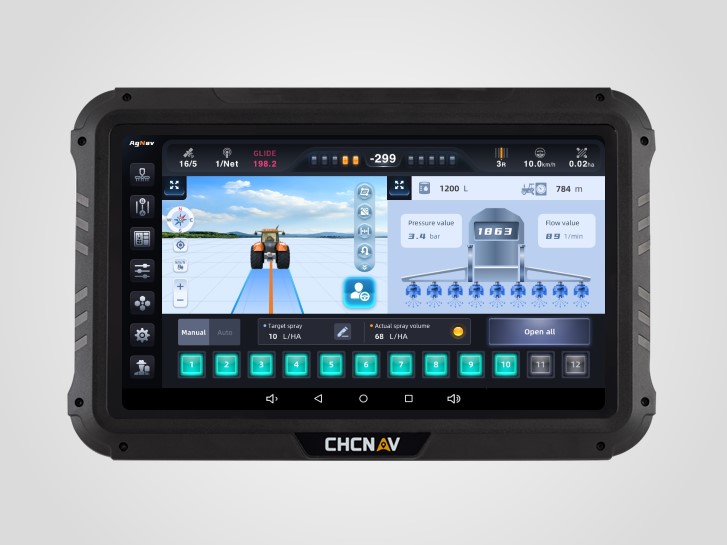
The system maps the field as the sprayer works and remembers which areas have been covered. When the boom re-enters a previously sprayed area, the relevant boom sections close automatically; when the boom crosses the field boundary, the over-the-boundary sections close as well. No more chemical applied where it has already been applied, and no more chemical lost outside the treated area. The savings show up on the chemical budget at the end of the season.
Sprayer ground speed never stays constant. Headlands, slope, soft ground, and traffic in the field all push the speed up or down inside a single pass. The SprayX100 reads ground speed and modulates the application rate accordingly, so the litres-per-hectare delivered to the crop stays on the label rate regardless of how fast the tractor is moving. If the operator runs ahead of the system's capacity to deliver, a cab alert flags the rate shortfall so it can be corrected on the spot.
The system starts spraying when ground speed crosses an operator-set threshold and stops when speed drops below it. The operator no longer has to manage the boom switch at every headland turn. Hands stay on the wheel, attention stays on the field, and the application starts and stops on the same line every pass. The benefit compounds on smaller, irregular fields with many turns.
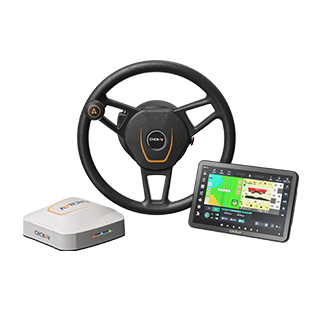
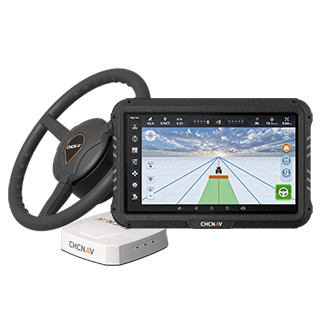
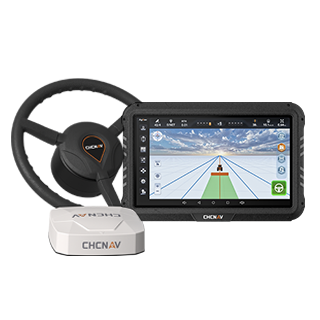
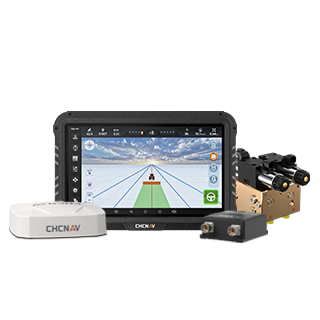
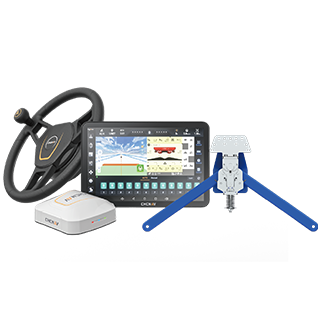
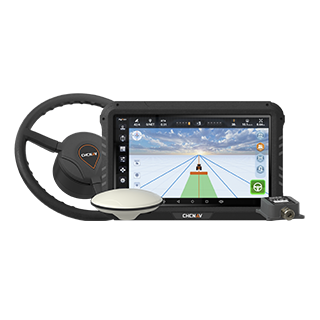
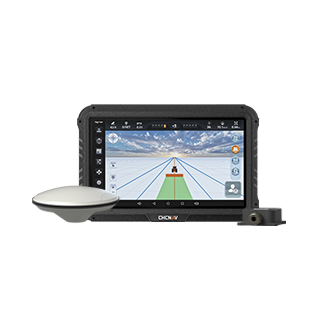
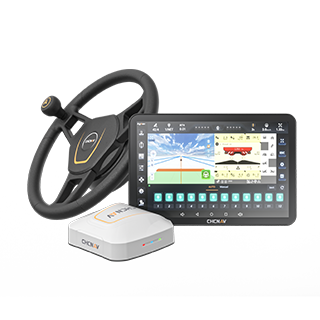
The SprayX100 runs on the same cab display the operator uses for auto-steering. There is no separate spray screen to buy, mount, learn, or maintain. The cab stays uncluttered, the operator's forward visibility stays clear, and the upfront investment is lower because the screen hardware does double duty. The integration pairs naturally with the CHCNAV Guide-10 display unit and the X10, NX510, NX610, or NX612 auto-steering systems already in the cab.
Section control closes whole sections of the boom. The SprayX100 goes further: at the nozzle level, the software interface marks which individual nozzles are spraying into an already-treated zone, so the operator can shut off only those nozzles instead of the whole section. The result is a finer cut on overspray, less wasted chemical, and a cleaner application profile for the crop.
Picking the right nozzle for a given target rate and forward speed is one of the small daily decisions that gets a sprayer setup right or wrong. The SprayX100 takes the operator's target flow rate and ground speed and recommends the nozzle model that best matches the job. Less time with the nozzle manual on the workbench, less chance of an incorrect nozzle pulling the application off-rate, faster onboarding for newer operators.
The features above belong to a wider shift in precision agriculture. For the past decade, the centre of gravity of agricultural automation has been auto-steering: keeping the tractor on a planned line so the operator does not have to. Auto-steering is now well-established across mid- and large-scale farms in most arable regions, and the productivity payoff is well understood.
Spraying automation is the next layer up. Where auto-steering solves the path-planning problem, spraying automation solves the input-application problem. The two are complementary. An auto-steered tractor without spraying automation still overlaps, still misses, and still applies the wrong rate when speed varies. A sprayer with section control on a manually steered tractor still drifts off-line on long passes. Together, the two systems deliver consistent application along consistent passes, which is what the crop and the input bill both reward.
The economics of spraying automation are clearer than the economics of many other precision-agriculture investments. A typical broadacre operation that adopts section control alone reduces total chemical usage by a measurable few percentage points each season, with the saving coming directly out of overlap and over-the-boundary application. Speed-adaptive rate control adds further savings by holding the application on the label rate. Nozzle-level overlap detection trims another fraction off the chemical bill. None of these savings depends on a yield response in the crop; they come straight from the input ledger.
The cab-display integration story matters in its own right. Operators of recent-vintage tractors juggle several screens during a working day: a tractor display, an auto-steering display, often a separate sprayer controller, plus their personal device. Each additional screen is a fragmented user interface, more training, more failure points, and more capital. A spraying system that runs on the same display as auto-steering is one less screen and one less integration project for the farm to maintain.
The SprayX100 sits inside the broader CHCNAV agricultural automation portfolio. The NX610 and NX612 auto-steering systems handle the path-keeping layer, with centimeter-class accuracy and compatibility across a wide range of tractor types including retrofit installations on older equipment. On the cab side, the SprayX100 reuses a CHCNAV cab platform the operator already runs, so the one-screen workflow does not require a separate spray display. The full precision agriculture solution on the agriculture site walks through how these pieces fit together by farm type and crop, and the CHC Navigation agriculture industry page sets the wider context.
Spraying is one of the highest-cost, highest-stakes operations on the modern farm. Getting the chemical on the crop at the right rate, in the right place, only once, is what separates a profitable spraying programme from one that burns through input budget. The 2026 SprayX100 upgrade brings that level of control to the sprayer, runs it on the same screen the operator already uses for auto-steering, and lowers the cost of getting started for farms that have not yet adopted section control. Spraying automation is moving from optional to standard, and the operations that adopt it now will spend the rest of the decade with a real per-hectare cost advantage.
CHC Navigation (CHCNAV) develops advanced mapping, navigation, and positioning solutions designed to increase productivity and efficiency. Serving industries such as geospatial, agriculture, machine control and autonomy, CHCNAV delivers innovative technologies that empower professionals and drive industry advancement. With a global presence spanning over 140 countries and a team of more than 2,200 professionals, CHC Navigation is recognized as a leader in the geospatial industry and beyond. For more information about CHC Navigation [Huace:300627.SZ], please visit: https://agriculture.chcnav.com/about/overview
Want to know more about how to reduce overlap and improve spraying accuracy with SprayX100? Speak with our experts.